What Is It Like to Live at the Barbican?
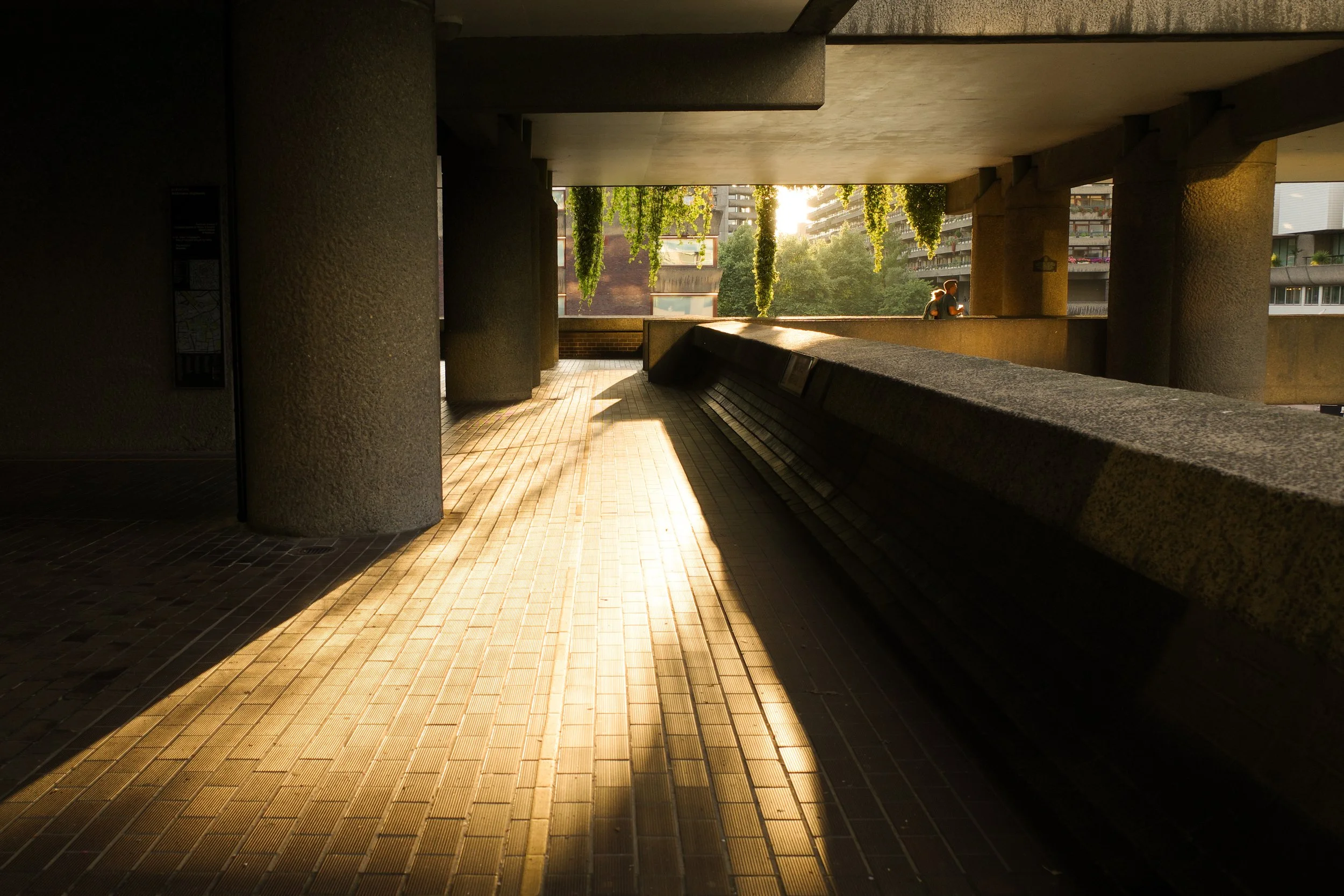
I get a lot of questions about this, so I’ve compiled some answers:
How did you come to live at the Barbican?
I first heard about the Barbican while studying modernist housing complexes and utopian communities. I researched Le Corbusier’s Unite d’Habitation, and while I was in Marseille working on a video about that, I decided to come to London to see the Barbican for myself. The first time I saw the Barbican, I couldn’t believe its scale, and I also couldn’t believe that people were allowed to live here! On that same trip to London, I met my now husband.
When it came time to decide where we should set up our lives together, we wanted to choose somewhere with architectural significance that was inspiring for us. It's hard to get more iconic than the Barbican! It took us a while to find the right flat - we looked at several units and put in offers to rent, but they moved too quickly. When we first toured our flat, we knew it was right.
When did you move in?
We moved to the Barbican in mid-2025.
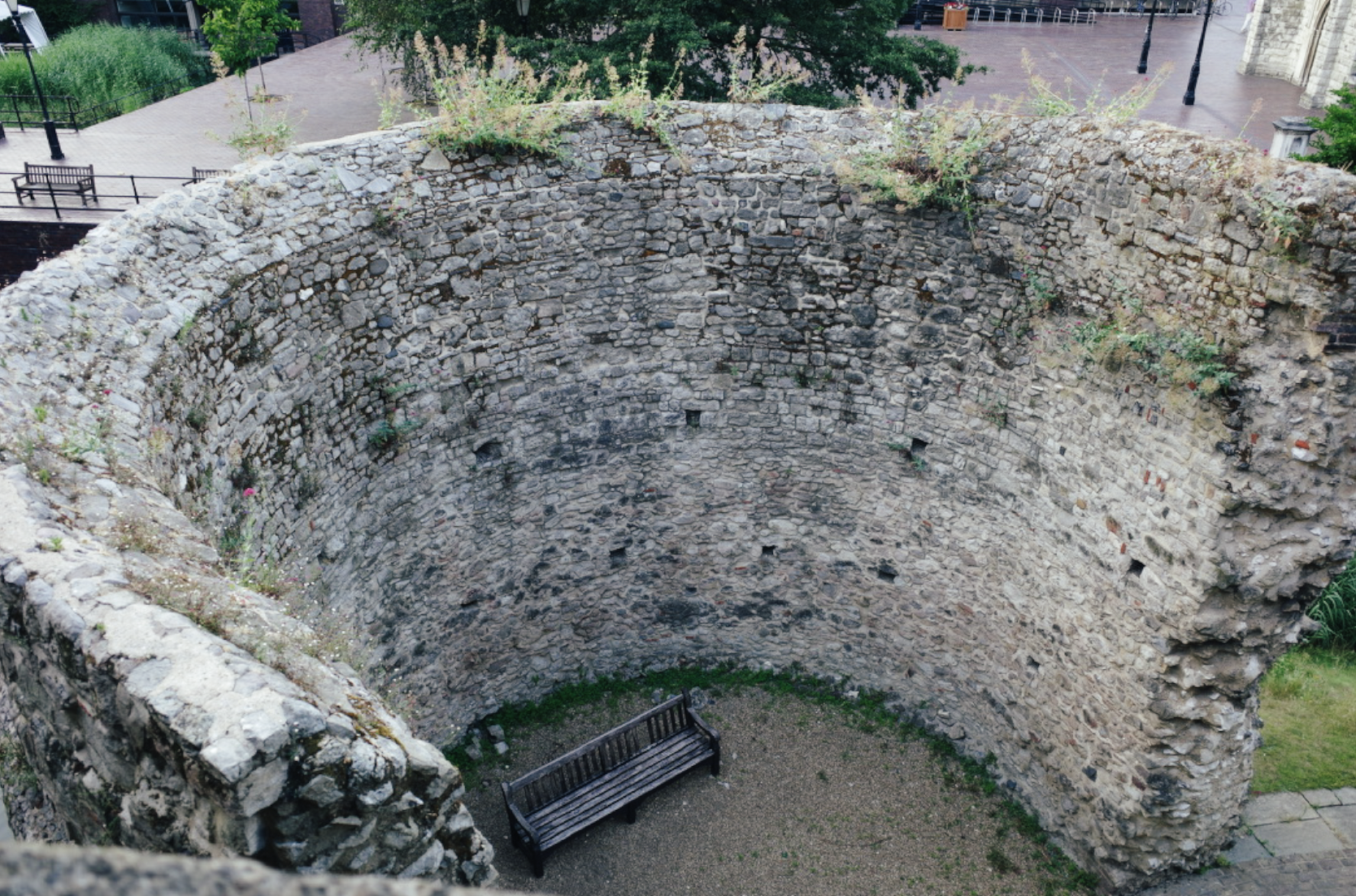
A Medieval-reinforced Roman tower remnant onsite at the Barbican
How come it was your dream to live at the Barbican?
I grew up in a very remote part of Washington State in the US, right on the Canadian border. It was beautiful, but very isolated. As a kid I dreamed of living in close proximity to others. I have lived in extremely remote areas in Alaska and Washington, but also in major cities like Seattle, so I have an appreciation of both styles of living. I’ve dreamed for a long time of living in a place where you can feel both a sense of expansiveness and connection. The Barbican seems to offer a bit of both - the serenity of green spaces and water you’d find in the country, but also the amenities and proximity to neighbors that you can expect in a city. I also consider myself an idealist - optimism is one of my core guiding principles. The Barbican was built on a section of London that was heavily-bombed during WWII. It’s built on a set of utopian principles and a hope for a better world, you can really feel that in the architecture. As Britain emerged from WWII, they were open to a new way of living, and open to trying something new, which is very inspiring to me. At the same time, The Barbican is a place where the (relatively) new meets the very, very old. Sections of Roman wall run through the estate. St. Giles, the local church onsite has stood for nearly 1,000 years.
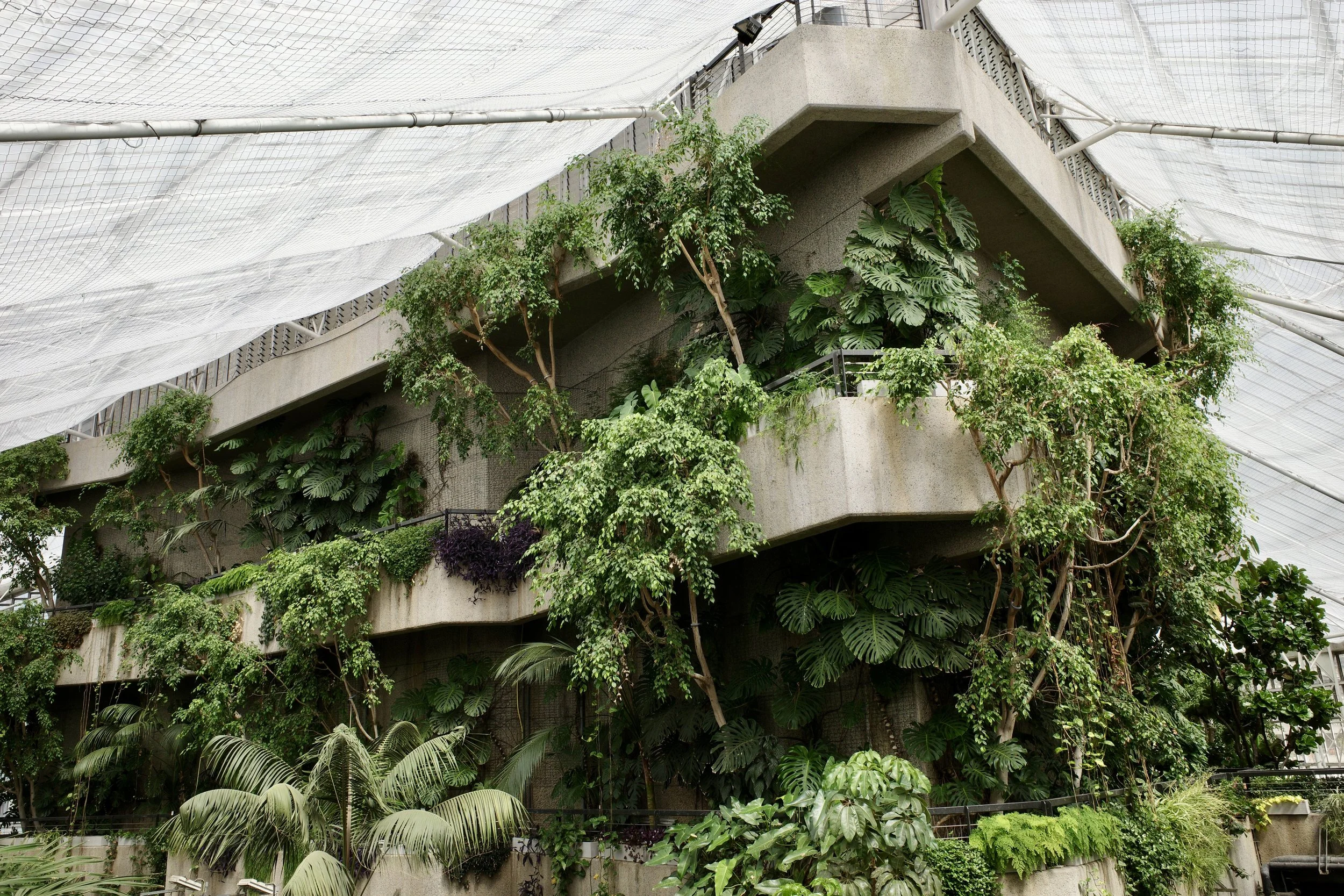
The Barbican Conservatory
What's your favorite part about your flat?
It’s hard to pick just one thing about our flat that I love the most, but if I had to, it would be the view. We have massive floor to ceiling windows that run the width of our flat. Our flat overlooks a large portion of the estate. We can see hundreds of other flats, but also have a clear view of the “lake”, and the half-pipe fountain that pours into it. We open the windows during warm weather and can hear the fountain, kids playing in the playground, music coming from the guildhall school of music next door.
The concrete is another thing we love about our flat - we have neighbors above and below, as well on either side of us, but the concrete blocks nearly all of the noise. I’ve lived in apartments where you can hear all of your neighbors, and that just isn’t the case here.
We also were lucky enough to get a flat that has a lot of original 1960’s features still intact. The architects were sticklers for detail. They put a lot of thought into what it would be like to live in these flats, and incorporated a lot of very forward thinking materials and designs. Our flat has a Garchey - a very early in-sink waste disposal system that can handle a much more robust array of things than a garbage disposal - for example, broken glass, without any issue. The kitchen was built by a yacht company - Brooke Marine, so they are modeled off of a very efficient ship’s galley. I cook quite a bit, and really love the kitchen design.
How big is your space, how many rooms etc.?
Just under 800 square feet (74 square meters), but it feels more spacious thanks to the smart design. We have one bedroom, a room with a bathtub/shower and sink, a separate toilet room, a partially enclosed kitchen, a connected dining/living room, and a study space with sliding doors that can close to serve as our guest bedroom when we have visitors.
What’s it like living at the Barbican?
In short: very convenient. Onsite we have a library, concert halls, art galleries, theatres, cinemas, coffee shops, restaurants, music school, music store, dry cleaner, pub, church, conservatory, resident parks, and lakeside terraces. One of the best decisions the architects made was to make it a car-free estate. There are massive subterranean parking garages, so you can easily have a car onsite, but the entire estate is built on top of them, so you can walk for miles without having to be in traffic. It’s extremely pedestrian-friendly. This also means that we don’t have the noise or fumes of cars you’d expect of London until you leave the estate.
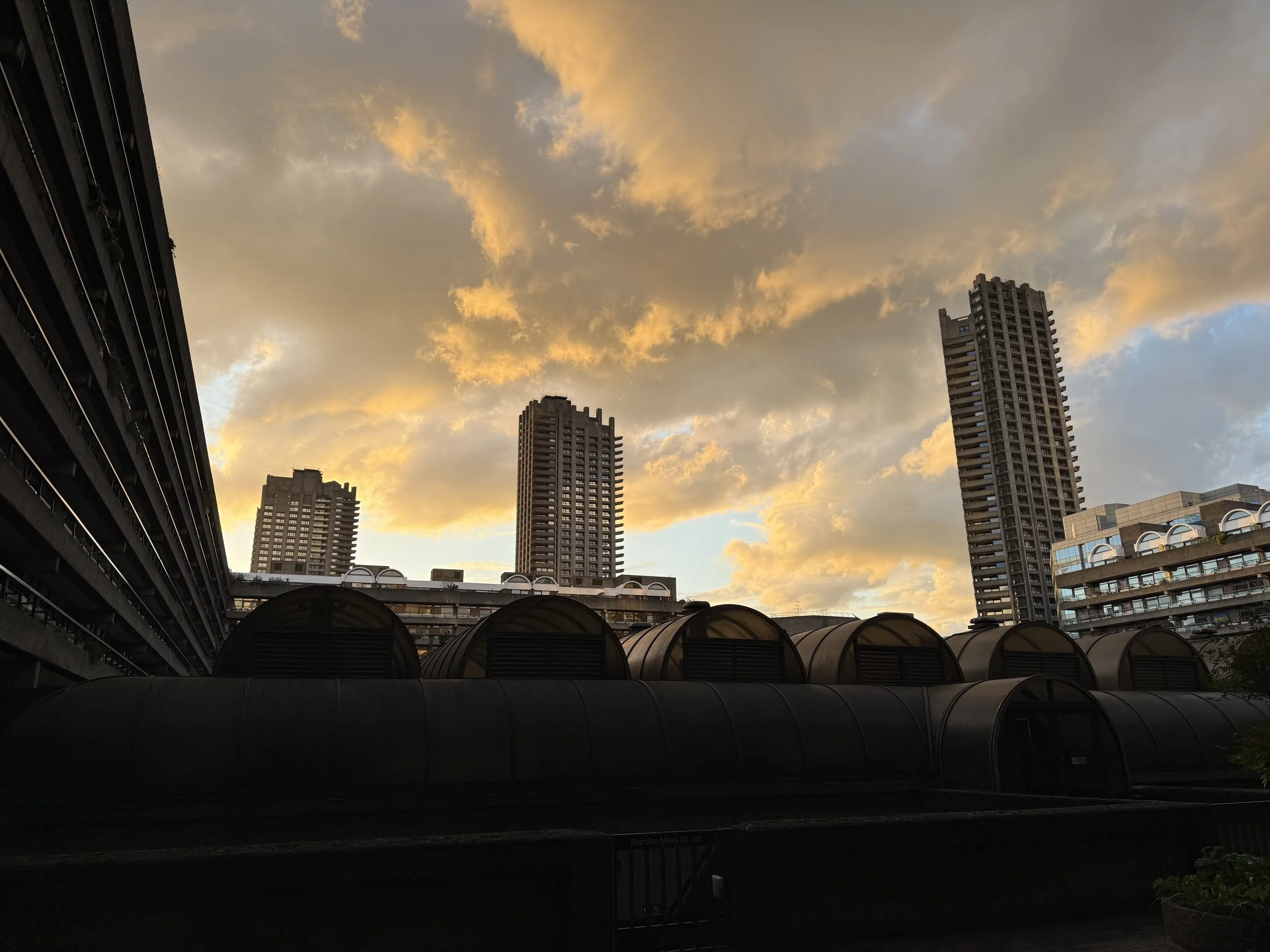
Sunset over the Barbican
Do you have special access to certain parts of the arts center/venue?
Living onsite doesn’t come with any perks for the Arts Centre beyond easy access. But residency does come with what’s called the “magic key.” This key gets you access to large, beautifully-maintained private gardens just for residents, including my favorite area, the “igloos.” The Igloos are a series of circular brick pods that are sunken below the water line, connected with a walkway. They have domed trestles that plants climb on, creating shade, and the “igloo” shape. They’re a perfect place to enjoy a book or coffee with a friend during the summer!
What’s your favorite thing so far about living there?
The amenities are certainly wonderful, but my favorite thing about living at the Barbican is the people. My friends onsite range in age from their 20s, all the way up into to their 90s. Everyone is from differing backgrounds, but the Barbican seems to draw people who have an appreciation for beauty. I also think to live in somewhere so different, you need to have an open mind. My neighbors are artists, designers, priests, lawyers, retirees, musicians, young parents, authors, filmmakers, small business owners, and more. I have lived a lot of places, but never anywhere where so many of my neighbors have made an active choice to live there, and that is very unique. The beauty of the Barbican is incredible, but it’s nothing without the people who occupy it.